
Learn Car Driving on your own tutorial (Manual Gear Change), Basic Operations, Safety Rules, Checks
Self learn driving a car (manual gear) in Indian roads (light motor vehicle) (LMW), basic operations (gear, brake, clutch, accelerator), safety rules. know vehicle lights, wind screen wipers on off, car engine heat indicator checking, radiator fan, coolant water mixture regular checking and other important steps to operate vehicle safely. Many people join motor driving schools to learn car driving and some of them have no time to join these schools and also miss out on some of the important points on driving a car very safely. Driving safely is the main point here because there is no use being an expert in car driving and ultimately dying a death in a careless accident. In this article we will stress on the main points and how you can learn car driving yourself and drive safely each and every time.
 Use (pressing) of the accelerator must be very minimal and minute until you become a master of car driving......there must a feather touch of the accelerator...do not press too much as it leads to confusion during learning times.. though the car may stop during your minimal and minute touch of the accelerator, you can control the movement of the car by the holding the release of the clutch....at any time of your initial days of learning-->> DO NOT CROSS THE SPEED MORE THAN 40KMPH
-->>
this below adjustments are for people who would like to have both manual assistance as well as some slight modification in dual control of vehicle
Use (pressing) of the accelerator must be very minimal and minute until you become a master of car driving......there must a feather touch of the accelerator...do not press too much as it leads to confusion during learning times.. though the car may stop during your minimal and minute touch of the accelerator, you can control the movement of the car by the holding the release of the clutch....at any time of your initial days of learning-->> DO NOT CROSS THE SPEED MORE THAN 40KMPH
-->>
this below adjustments are for people who would like to have both manual assistance as well as some slight modification in dual control of vehicle
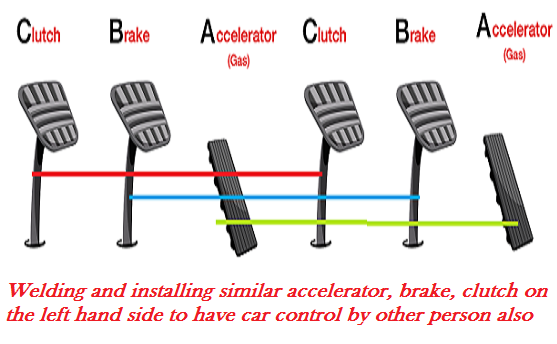 accelerator brake clutch welding on both sides of car to facilitate driving assistant.
2. You will have to weld similar accelerator, brake and clutch pads to the left side of the car so that the person next to you can have control over all the three....welding takes no more than Rs 500
Starting to learn your car (Light Motor vehicle) (Heavy Motor Vehicle) (Four Wheeler) yourself..
Check the gear rod (it must be in neutral position as marked) (in neutral position the gear rod moves freely left or right and also up or down -> a few millimeters only)
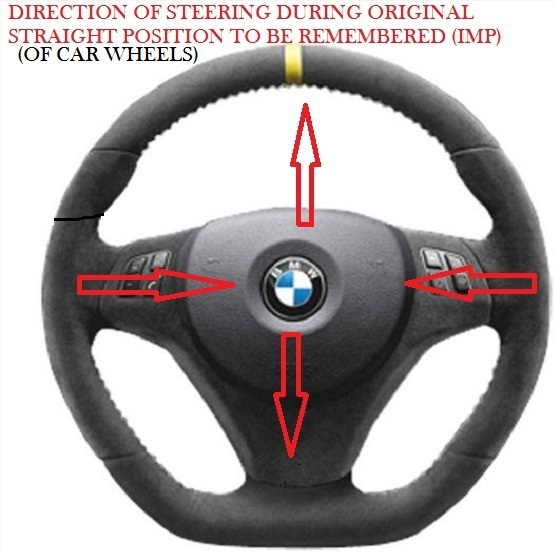
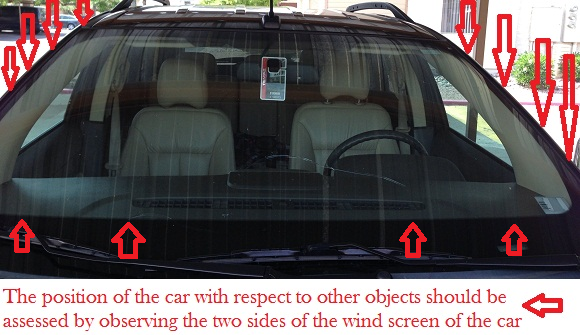
check the position of the steering with respect to tyres. Tyres must be straight and at this position of tyres, remember the position of steering. Your position (car's position) with respect to outer objects should be understood by the distance of the objects form the two sides of the car's wind screen. Ensure that there is a gap of atleast 3 feet on both sides of the wind screen to move forward or else you are bound to collide with an object
Switch on the ignition key and once the car engine starts. press the accelerator for some time so that the engine heats up and the flow of fuel normalizes.
accelerator brake clutch welding on both sides of car to facilitate driving assistant.
2. You will have to weld similar accelerator, brake and clutch pads to the left side of the car so that the person next to you can have control over all the three....welding takes no more than Rs 500
Starting to learn your car (Light Motor vehicle) (Heavy Motor Vehicle) (Four Wheeler) yourself..
Check the gear rod (it must be in neutral position as marked) (in neutral position the gear rod moves freely left or right and also up or down -> a few millimeters only)
check the position of the steering with respect to tyres. Tyres must be straight and at this position of tyres, remember the position of steering. Your position (car's position) with respect to outer objects should be understood by the distance of the objects form the two sides of the car's wind screen. Ensure that there is a gap of atleast 3 feet on both sides of the wind screen to move forward or else you are bound to collide with an object
Switch on the ignition key and once the car engine starts. press the accelerator for some time so that the engine heats up and the flow of fuel normalizes.
CAR DRIVING SELF LEARNING TUTORIAL FOR BEGINNERS' INDIAN ROADS
car (LMW) light motor vehicle self-learn driving tutorial Indian roads, understanding basic operations, safety rules, procedures, driving safely on road First of all let me explain to you about a four-wheeler, especially a car assuming that you have not yet driven a two wheeler too A car has a steering which is to be turned for direction change of a car (only when required). It means seriously that a steering is not a play tool and can be compared to the trigger of gun.
CAR DRIVING, POSITIONING, SAFETY TIPS LEARN YOURSELF
car windshield, the two extreme sides of car wind shield should be noted for assessing your position on road with respect to other and also the dash board end which meets with the wind shield is the mark you must remember which helps you at what position you are in with respect to cars or objects in front of you.
CAR MAIN PARTS TO KNOW FOR SELF LEARNING
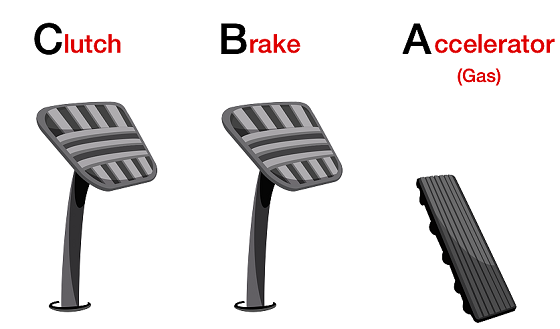
A car has an accelerator, brake, clutch, gear rod .....in the directions of right to left........... G (gear Rod) C(clutch) B(brake) A(accelerator). The Clutch is the heart of the vehicle.........you will have to change gears pressing the clutch and whenever there is a need of applying brakes, you need to apply the clutch first...pressing the clutch nullifies the impact of the accelerator in moving the car forward and immediately apply the brakes.........
Use (pressing) of the accelerator must be very minimal and minute until you become a master of car driving......there must a feather touch of the accelerator...do not press too much as it leads to confusion during learning times.. though the car may stop during your minimal and minute touch of the accelerator, you can control the movement of the car by the holding the release of the clutch....at any time of your initial days of learning-->> DO NOT CROSS THE SPEED MORE THAN 40KMPH
-->>
this below adjustments are for people who would like to have both manual assistance as well as some slight modification in dual control of vehicle
starting to learn driving your car LMV (Light Motor Vehicle) Four Wheeler yourself
1. You will have to adjust the clutch such that, upon the release of slightest release of the clutch there is movement of the car without the need to press the accelerator
accelerator brake clutch welding on both sides of car to facilitate driving assistant.
2. You will have to weld similar accelerator, brake and clutch pads to the left side of the car so that the person next to you can have control over all the three....welding takes no more than Rs 500
Starting to learn your car (Light Motor vehicle) (Heavy Motor Vehicle) (Four Wheeler) yourself..
Check the gear rod (it must be in neutral position as marked) (in neutral position the gear rod moves freely left or right and also up or down -> a few millimeters only)
check the position of the steering with respect to tyres. Tyres must be straight and at this position of tyres, remember the position of steering. Your position (car's position) with respect to outer objects should be understood by the distance of the objects form the two sides of the car's wind screen. Ensure that there is a gap of atleast 3 feet on both sides of the wind screen to move forward or else you are bound to collide with an object
Switch on the ignition key and once the car engine starts. press the accelerator for some time so that the engine heats up and the flow of fuel normalizes.
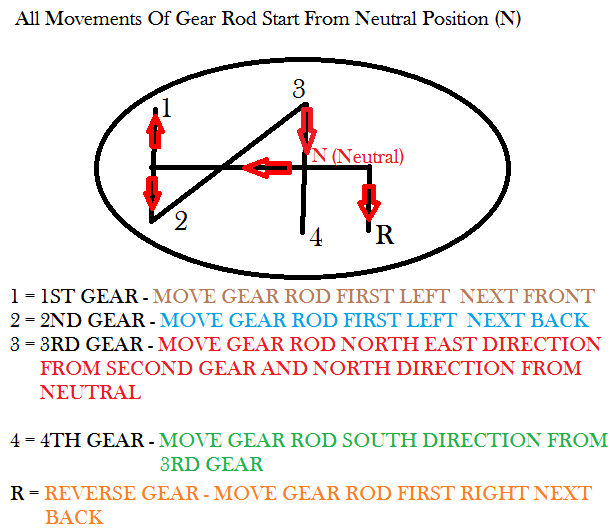
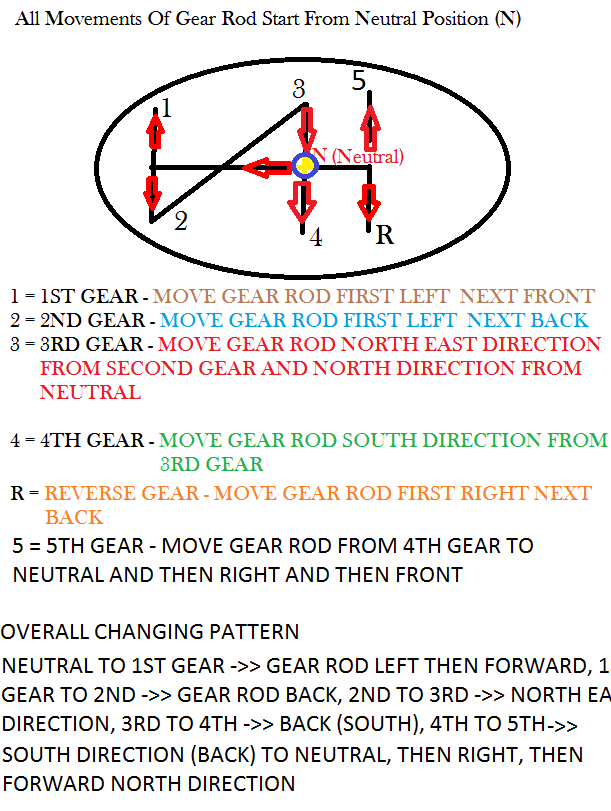
car gear rod movement direction from neutral to all gears and reverse gear 1st, 2nd, 3rd, 4th, Clutch, Changing Gear, Moving Car Forward, Steering Control, Brake Application Steps
1. Press the clutch to full length downwards, shift the position of the gear rod to left side and then forward (north direction) as shown in figure. Release the clutch slowly till the vehicle starts to move. Once your car starts moving, hold the clutch position to the same point at where the vehicle moved and stop releasing the clutch further (remember for the first few days you are only going to move the vehicle in first gear and with clutch support and not with accelerator. any adjustments, the nearest mechanic may adjust the clutch in such a way that car moves upon partial release of clutch. As the vehicle moves forward try sticking to a straight marking on the road so that you stick to the same line and while turning left or right do it slowly (turning the steering) and once the turn is maneuvered, ensure that the steering is back to normal position (the steering normally comes back to the original position, but we must make it come in the exact time) so that there is no more unnecessary turning of car. For bringing the car to stop, you will have to press the clutch fully and then apply the brake and bring the gear rod to neutral position put on the hand brakes (REMEMBER THE NEXT TIME YOU ARE STARTING YOUR CAR YOU MUST RELEASE THE HAND BRAKE or else you end up damaging your car) and then release the leg brake (Hand brakes avoid movement of car when placed in a slope area). Practice this for five days (one hour per day) so that you are in control of the steering, clutch, neutral to first gear (left front) movement of gear rod and back to neutral from first gear. After five days of learning now you must have somewhat got some control of your car.....lets now practice to move the car in different gears......